JAPANESE TIN TOYS FROM 50's TO 60's - Pitcheetoy
Jouets anciens - Antique Toys
Depuis 1970 - Since 1970
Créateur du Salon TOYMANIA
Creator of the PARIS antique toy show
TOYMANIA

DIY
ACTU/NEWS
La Magie des Jouets Anciens
Il y a quelque chose de profondément
émouvant à tenir un jouet qui fut jadis serré dans les petites mains
impatientes d'un enfant né il y a un siècle. Les jouets anciens portent en eux
une sorte d'autobiographie silencieuse — non pas celle des rois ou des
conquérants, mais celle de la joie enfantine ordinaire, des après-midis
pluvieux et des mondes imaginaires.
La Chasse
La recherche elle-même constitue la moitié
de l'enchantement. Déambuler dans un marché aux puces poussiéreux à l'aube,
quand la lumière est encore dorée et hésitante, les yeux parcourant des tables
encombrées d'objets oubliés — et puis, soudain, le voilà. Une locomotive en fer-blanc à la peinture passée, une
calèche en fonte tirée par des chevaux, une poupée en celluloïd aux yeux de
verre qui semblent encore garder un secret. Le cœur s'emballe. Le temps
s'effondre un bref instant.
La chasse aux jouets anciens est une
discipline alliant patience et sérendipité à parts égales. On ne peut pas la
brusquer. Les meilleures trouvailles ne s'annoncent jamais — elles attendent
tranquillement sous une pile de cartes postales ou enveloppées dans un vieux
journal au fond de l'étal d'un brocanteur. Elles récompensent les curieux, les
persévérants, ceux qui acceptent de s'agenouiller pour regarder de plus près.
Les Objets Eux-Mêmes
Ce qui rend les jouets anciens si beaux,
c'est leur matérialité sans complexe.
Ils ont été fabriqués pour être touchés — martelés dans l'étain, sculptés dans
le bois, coulés dans la fonte, cousus dans le tissu. Il n'y a pas la légèreté
du plastique, ni le caractère jetable. Une toupie victorienne bien fabriquée
possède un poids et un équilibre qui semblent presque musicaux dans la main.
L'usure, elle aussi, fait partie de la
beauté. Un cheval à la peinture écaillée ou un ours en peluche élimé ne sont
pas abîmés — ils sont chargés d'histoire.
Chaque égratignure est une séance de jeu, chaque articulation desserrée témoigne
de l'amour qu'un enfant a versé dans un objet. Ces imperfections, les maisons
de vente aux enchères les appellent « patine », mais ce qu'elles désignent
vraiment, c'est la preuve d'une vie vécue.
Toucher le Temps
Le plaisir le plus profond de collectionner
des jouets anciens réside peut-être dans l'étrange intimité qu'ils offrent avec
le passé. On se retrouve à se demander : Qui
a joué avec ceci ? Quelles histoires racontait-il ? L'emportait-il au lit ?
Une poupée française en biscuit de porcelaine datant de 1890, un singe
mécanique en fer-blanc des années 1920, un camion en acier embossé de
l'après-guerre — chacun est un petit portail, un lien tactile vers un monde qui
n'existe plus mais qui, à travers cet objet, respire encore.
Dans un monde d'éphémère numérique, où rien
ne semble durer, il y a quelque chose de discrètement radical dans un objet qui
a traversé cent ans de changements et qui suscite encore l'émerveillement.
Chercher
des jouets anciens, c'est devenir, le temps d'un instant, un archéologue de
l'émerveillement — tamisant le temps non pas pour l'or ou la gloire, mais pour
la preuve simple et irremplaçable que les enfants ont toujours su rêver.
The Magic of Antique Toys
There is something profoundly moving about
holding a toy that was once clutched in the small, eager hands of a child born
a century ago. Antique toys carry within them a kind of silent autobiography —
not of kings or conquerors, but of ordinary childhood joy, of rainy afternoons
and imagined worlds.
The Hunt
The search itself is half the enchantment.
Wandering through a dusty flea market at dawn, when the light is still golden
and hesitant, your eyes scanning tables crowded with forgotten things — and
then, suddenly, there it is. A tin
locomotive with faded paint, a cast-iron horse-drawn carriage, a celluloid doll
with glass eyes that still seem to hold a secret. The heart quickens. Time
briefly collapses.
Antique toy hunting is a discipline of
patience and serendipity in equal measure. You cannot rush it. The best finds never
announce themselves — they wait quietly beneath a pile of postcards or wrapped
in old newspaper at the back of a dealer's booth. They reward the curious, the
persistent, the ones willing to kneel down and look closer.
The Objects Themselves
What makes antique toys so beautiful is
their unapologetic materiality. They
were made to be touched — hammered from tin, carved from wood, cast in iron,
stitched from cloth. There is no plastic lightness, no disposability. A
well-made Victorian spinning top has a weight and balance that feels almost
musical in the hand.
The wear, too, is part of the beauty. A
chipped paint horse or a threadbare teddy bear is not damaged — it is storied. Every scratch is a session of
play, every loose joint a testament to the love a child poured into an object.
These imperfections are what auction houses call "patina," but what
they really mean is evidence of a life
lived.
Touching Time
Perhaps the deepest pleasure of collecting
antique toys is the strange intimacy it offers with the past. You find yourself
wondering: Who played with this? What
stories did they tell? Did they carry it to bed? A French bisque doll from
1890, a tin windup monkey from the 1920s, a pressed steel truck from the
postwar years — each one is a small portal, a tactile connection to a world
that no longer exists but somehow, through this object, still breathes.
In a world of digital ephemerality, where
nothing seems to last, there is something quietly radical about an object that
has survived a hundred years of change and still delights.
To
search for antique toys is to become, for a moment, an archaeologist of wonder
— sifting through time not for gold or glory, but for the simple, irreplaceable
evidence that children have always known how to dream.

Il y a 49 ans, la première boutique permanente de jouets anciens ouvrait ses portes à Paris. Du nom de HOPE elle resta ouverte jusqu'en 1978.Vous avez 2 videos qui montrent et raconte cette aventure de l'époque ou seulement une poignée de collectionneurs ne désiraient pas trop faire connaître ce hobby de la collection de jouets et malheureusement ou heureusement pour eux, une autre poignée de la nouvelle génération de collectionneurs a voulu faire connaître à un plus large public ce merveilleux hobby. La Grand Livre du jouet venait de s'ouvrir à un nouveau monde ...
Bonne visualisation à tous et encore merci à Richard d'être venu me rendre visite et faire un retour un arrière de cette aventure de 1970.
49 years ago I was opening the first antique toy shop in Paris. "Hope" the shop's name, stayed open untill 1978. Here are in french (sorry about that) the aventure of these new generation of antique toy collectors that we were at that moment. Click on the links and you will have a little idea of what it was at that time to be a toy collector.
Thank you for watching these 2 videos, hope you'll enjoy them.
Si vous désirez voir la salon Toymania de 1983 au Palais des Congrès de Paris, cliquez sur le lien.
If you like to see the Toymania show 1983 please click on the link.
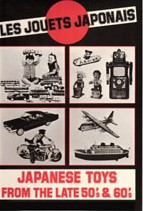
LES JOUETS JAPONAIS 50's - 60's. Ce livre est épuisé depuis plus de 10 ans, il a été un des premiers livres publiés sur les jouets en tôle imprimée made in Japan. Reproduction de catalogues d'époque très difficiles à trouver et permet de dater des jouets bien connus mais pas facile à dater. Aujourd'hui vous pouvez le télécharger gratuitement au format PDF ou le lire directement sur le site internet CALAMEO .. http://fr.calameo.com/read/00106668171d3c8fda2f7
JAPANESE TIN TOYS From late 50's & 60's. This book is out of print since 10 years by now. This is the first book to be published about tin toys made in Japan. A lot of reproduction of toys catalogs hard to find. This will help you to date your Japanese tin toys. You can download it FREE either to the PDF format or read it by going to this web site :
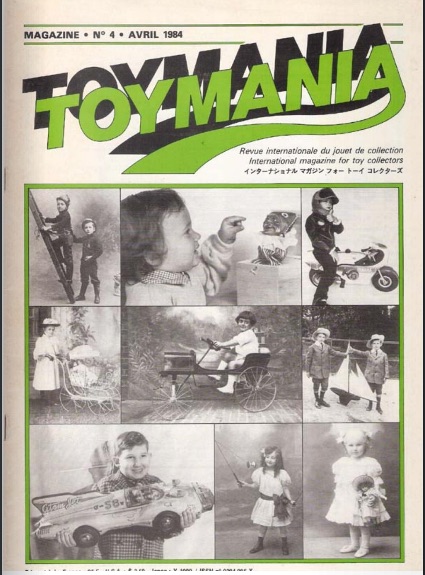
Vous pouvez également lire ou télécharger gratuitement le magazine TOYMANIA N°4 :http://fr.calameo.com/read/001066681ddb31bd37434
You can download TOYMANIA magazine number 4, out of print for years now, free : http://fr.calameo.com/read/001066681ddb31bd37434
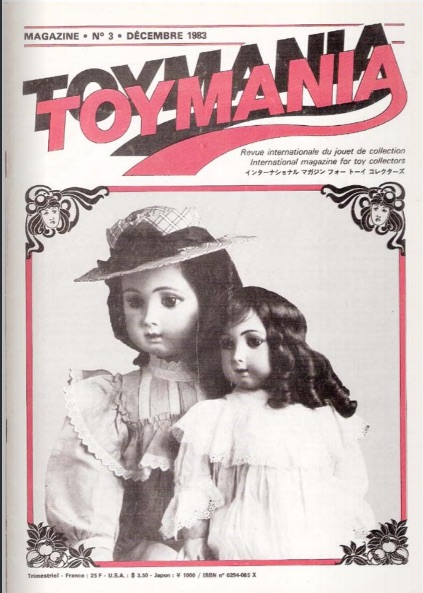
Vous pouvez également lire ou télécharger gratuitement le magazine TOYMANIA N°3 :http://fr.calameo.com/read/001066681aebd5fcd1195
You can download TOYMANIA magazine number 3, out of print for years now, free :http://fr.calameo.com/read/001066681aebd5fcd1195